

Have you ever been told to “just share your story” in your content marketing, and your brain immediately goes blank? It happens to the best of us! So many business owners and thought leaders assume their story needs to be impressive or intense to be worth telling.
But a good story is more about perspective than drama. The stories worth sharing on your social media channels, in your blog, or in your email newsletter are often small and ordinary, but told in a way that connects with your audience.
Once you know how to spot those moments, you’ll never run out of content again.
Almost Any Moment Can Become a Story
The bar for “a good story” really isn’t very high. Your stories don’t need a dramatic turning point or a jaw-dropping revelation. It just needs to be a moment that means something to you, even if it seems small on the surface.
Think about the last time you laughed, got frustrated, or had an “aha” realization during your daily life. Or rewind your life a few years, and pinpoint some pivotal moments, experiences, or hard times. These everyday experiences are often the most relatable to your audience, because chances are, they’ve experienced something similar.
You don’t need to try to impress people with how interesting your life is. Instead, focus on connecting with them through a shared experience.
Here are a few everyday stories that I’ve used in my own email marketing:
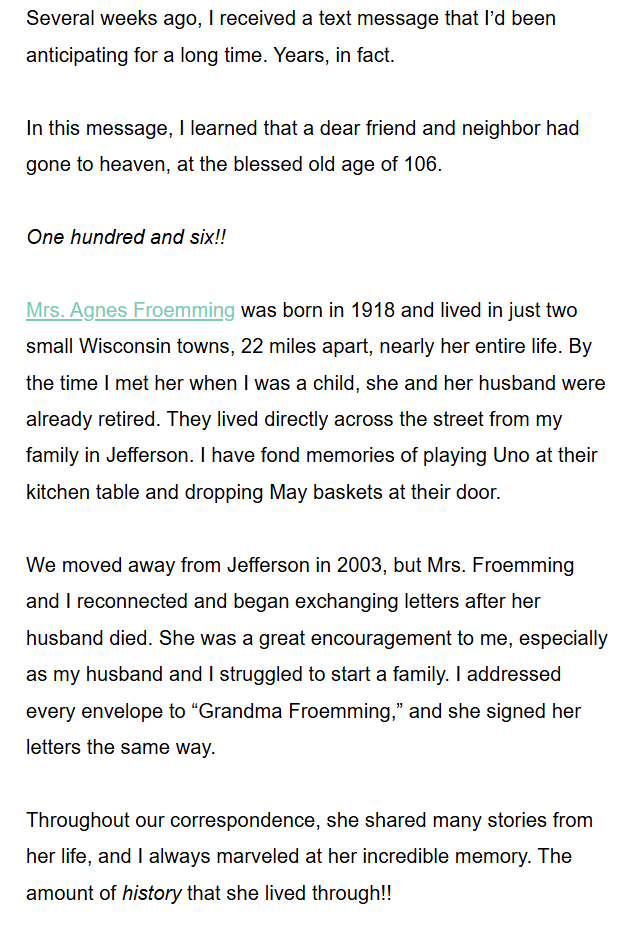
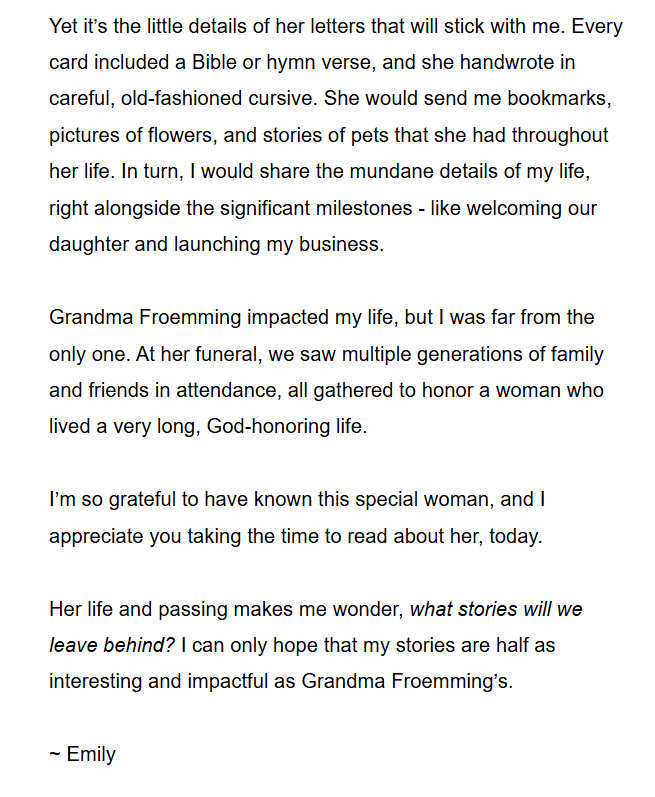
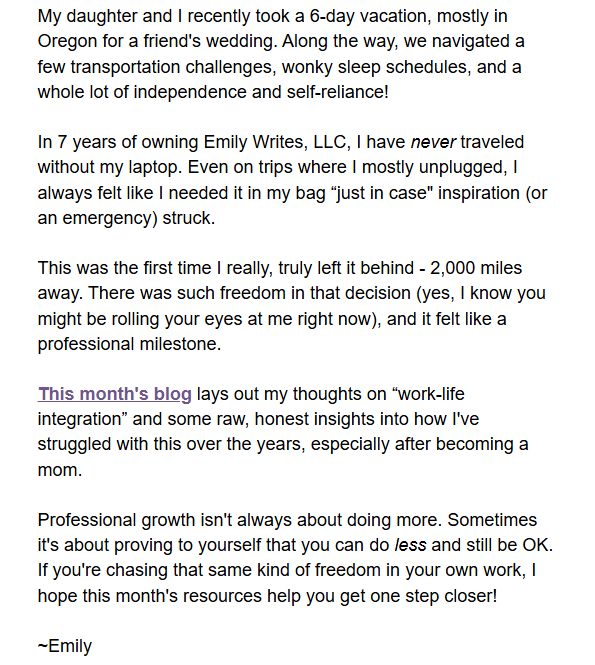
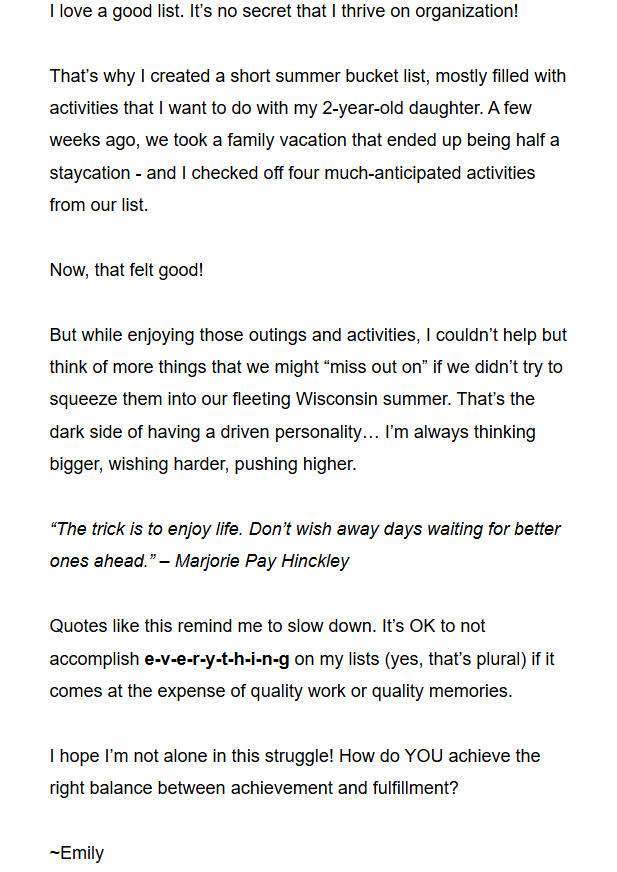
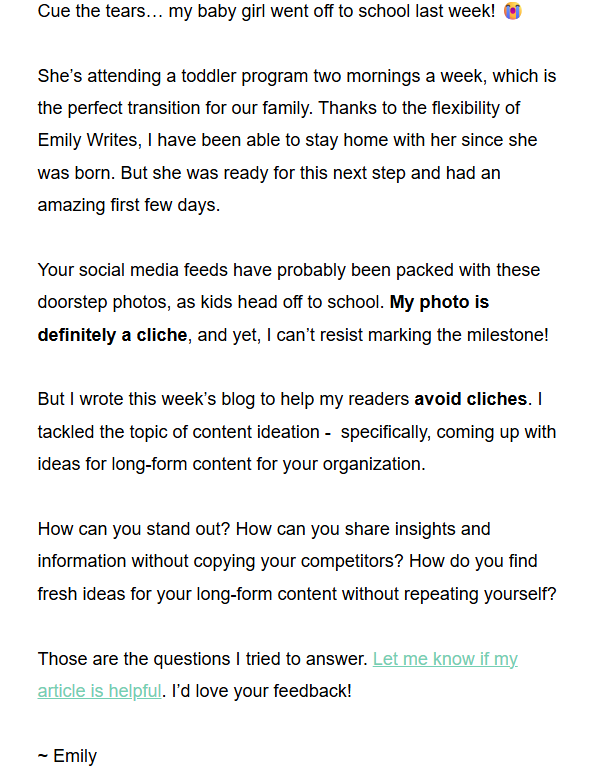
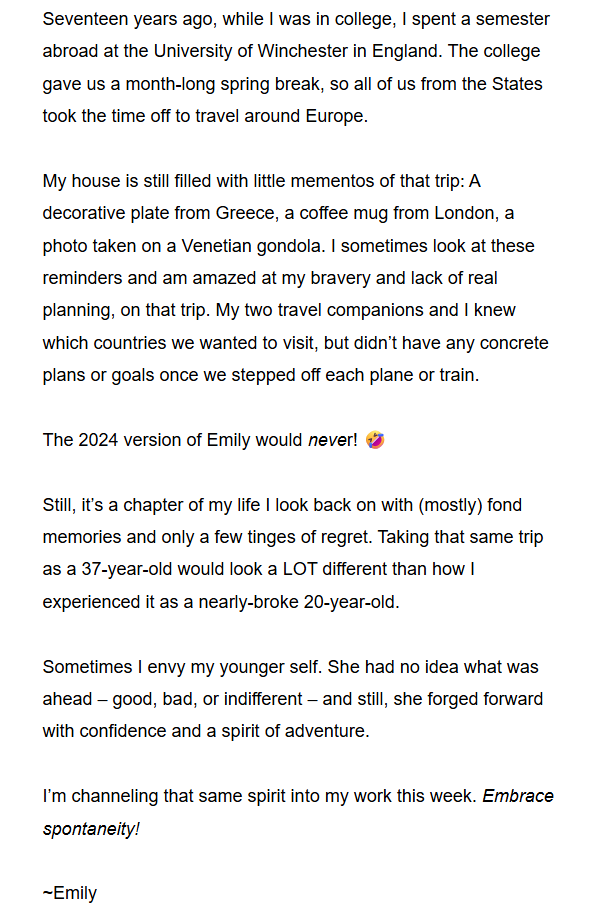
See how simple these are?
Once you start paying attention, you’ll notice story-worthy moments happening around you all the time. Look for conversations with clients, a mistake you made and fixed, or a random thought you had while doing school drop-off. These can all turn into stories that connect with your audience.
How to Identify Which Stories Are Worth Telling
Not every life experience needs to make it into your content, of course, so how do you choose? Here are a few simple filters that can help you figure out which ones have earned their spot in your blog or email newsletter.
Start with a Feeling
The best stories usually start with an emotion. Ask yourself how an experience made you feel instead of focusing on what technically happened. Did you feel proud, embarrassed, relieved, or surprised? That feeling is the real story. The actual events are just the backdrop that gets you there.
This shift in thinking takes the pressure off. You don’t need something exciting to happen to stir up a genuine (and shareworthy!) emotion.
Look for the “Aha” or the Mistake
Some of the most valuable stories come from lessons learned the hard way. Think about a time you misjudged a situation, made an assumption that proved wrong, or had a sudden realization that changed how you approach your work.
Those moments always work well because they:
- Show your audience there’s a human behind your polished brand
- Offer a takeaway or lesson they can apply to their own lives
- Build trust through honesty instead of perfection
- Open a door for a connection or engagement
Notice What You Keep Talking About
Pay attention to the stories you find yourself retelling in conversation. If you’ve mentioned a particular client experience, a personal habit, or a recurring frustration more than once, that’s a sign it resonates with you. If it resonates with you, it’ll likely resonate with your audience, too.
Keep a running list of these recurring topics. You’ll start to notice patterns that point toward your most authentic, repeatable content themes.
Tying Your Story to Your Brand and Your Audience
Identifying a good story is only half the equation. The next step is connecting that moment to your brand and making it relevant for the people you’re trying to reach. This step turns a good story into a real marketing tool.
Here’s how to make that connection every time:
- Identify the lesson. Ask yourself what you learned or what you’d tell someone else in a similar situation. Make that lesson the core message of your content, without being cheesy or preachy.
- Match it to your audience’s pain point. Think about what your target audience struggles with, and find the overlap between your story and their challenge. The stronger that overlap, the more relevant your content will feel.
- Define the takeaway you want readers to walk away with. Decide what you want your audience to think, feel, or do after reading. This gives your story a purpose.
- Add a clear next step. Whether it’s a mindset shift, a practical tip, asking people to comment on your post, or an invitation to reach out, give your readers something to do with the insight you just shared.
This process doesn’t need to feel forced or overly strategic. Truthfully, once you’ve practiced it a few times, it becomes second nature. You’ll start noticing the brand-relevant angle in a story almost as soon as it happens.
Your Stories Are the Best Ghostwriter Starting Point
Once you know how to spot a good story and connect it to your brand, you’ve got something incredibly valuable: a head start for your ghostwriter.
Many business owners assume a ghostwriter or copywriter needs a polished outline or a detailed content strategy to get going. In reality, a handful of genuine stories can be just as powerful.
When you hire a ghostwriter, their job is to capture your voice and turn your ideas into compelling content. The stories you’ve identified using the filters above give them exactly what they need to do their job! Instead of starting from a blank page, your ghostwriter starts from real moments, emotions, and lessons they got straight from you.
This is especially useful if you’re new to working with a ghostwriter, or if you’ve struggled to hand off content that felt authentic in the past. Bring your stories to the table – through a quick voice memo, an email, or a conversation – and let your ghostwriter turn it into marketing content that is completely on-brand.
Get Help Turning Your Stories into Great Content
At the end of the day, your stories don’t need to be perfect, impressive, or even all that exciting. People just want to hear from real people, and that’s what your story will give them.
It may seem difficult right now, but the more you practice noticing these moments, the easier it becomes. You’ll be turning everyday experiences into content that genuinely connects with your audience before you know it!
Ready to hand that storytelling off to someone else? Reach out to me today to learn how my team and I can help you tell extraordinary stories, pulled from your ordinary experiences!